Artificial intelligence (AI) is rapidly transforming the automotive manufacturing industry. From automated production lines to predictive maintenance systems, AI technologies are reshaping how vehicles are designed, produced, and delivered. Automotive companies are increasingly adopting intelligent systems to improve efficiency, reduce operational costs, and enhance product quality.
As global competition intensifies and consumer expectations evolve, AI-driven manufacturing is becoming a strategic advantage for automakers seeking to modernize their production processes.
Understanding AI in Automotive Manufacturing
Artificial intelligence in manufacturing refers to the integration of machine learning, computer vision, robotics, and data analytics into production systems. These technologies allow machines to learn from data, identify patterns, and make decisions with minimal human intervention.
In automotive factories, AI systems are used to monitor equipment, optimize production schedules, detect defects, and manage supply chains in real time. This shift toward intelligent automation is a key component of Industry 4.0, where digital technologies connect and optimize industrial operations.
Key Applications of AI in Automotive Manufacturing
1. Smart Robotics and Automation
Robotics has long been a cornerstone of automotive production, but AI has made robots significantly smarter.
Modern AI-powered robots can:
- Adapt to changing assembly tasks
- Identify parts using computer vision
- Collaborate safely with human workers
- Improve precision in welding, painting, and assembly
This collaborative robotics, often called cobots, enables faster production while maintaining safety and accuracy.
2. Predictive Maintenance
Unexpected equipment failure can halt an entire production line, costing manufacturers millions of dollars.
AI systems analyze sensor data from machines to detect early signs of malfunction. These systems can:
- Predict when a machine is likely to fail
- Schedule maintenance before breakdowns occur
- Reduce downtime and maintenance costs
Predictive maintenance helps manufacturers keep production running smoothly and efficiently.
3. Quality Inspection with Computer Vision
AI-driven computer vision systems are transforming quality control in automotive factories.
Using high-resolution cameras and machine learning algorithms, these systems can:
- Detect tiny defects in vehicle components
- Identify paint imperfections or surface irregularities
- Ensure consistency in assembly
Unlike manual inspections, AI-based quality control operates faster and with greater accuracy, reducing defective products.
4. Supply Chain Optimization
Automotive manufacturing relies on complex global supply chains. AI tools help companies manage inventory, predict demand, and avoid supply disruptions.
AI-powered analytics can:
- Forecast material requirements
- Optimize inventory levels
- Identify supply chain risks
- Improve logistics efficiency
This leads to more resilient and cost-effective supply chain operations.
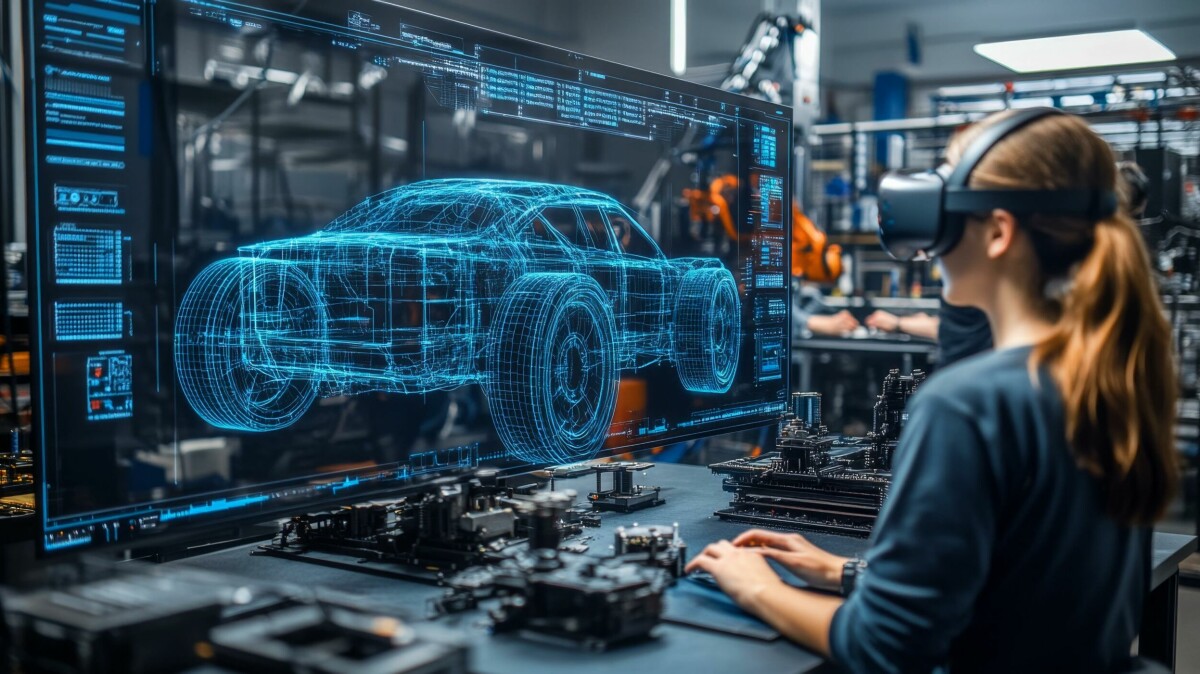
5. Digital Twins and Simulation
A digital twin is a virtual replica of a physical manufacturing system. AI uses data from sensors and machines to simulate factory operations in real time.
Manufacturers can use digital twins to:
- Test production changes before implementation
- Identify inefficiencies in the assembly line
- Improve factory layout and workflow
This technology reduces costly trial-and-error in real-world production.
Benefits of AI in Automotive Manufacturing
The integration of AI provides numerous advantages for automotive companies.
Higher Production Efficiency
AI systems can optimize production schedules, automate repetitive tasks, and reduce human errors, resulting in faster vehicle manufacturing.
Improved Product Quality
Advanced inspection systems ensure vehicles meet strict quality standards, reducing recalls and warranty costs.
Reduced Operational Costs
Automation and predictive maintenance minimize downtime and resource waste.
Enhanced Worker Safety
AI-powered robots can handle hazardous tasks such as heavy lifting, welding, and painting, protecting workers from potential risks.
Faster Innovation
Manufacturers can experiment with new vehicle designs and production methods through AI-driven simulations.
Challenges of Implementing AI in Automotive Manufacturing
Despite its benefits, adopting AI also presents several challenges.
High Initial Investment
AI technologies require significant investment in infrastructure, data systems, and workforce training.
Data Management Complexity
Manufacturing facilities generate vast amounts of data, which must be accurately collected and analyzed for AI systems to function effectively.
Workforce Adaptation
Employees must develop new skills to work alongside intelligent machines, making training and education essential.
Cybersecurity Risks
Connected factories increase the risk of cyberattacks, requiring robust security strategies to protect sensitive production data.
The Future of AI in Automotive Manufacturing
AI adoption in automotive manufacturing is expected to grow rapidly in the coming years. Future factories will likely feature fully connected systems where machines, robots, and humans collaborate seamlessly.
Several emerging trends will shape the industry:
- Autonomous manufacturing systems capable of self-optimizing production
- AI-driven design tools that accelerate vehicle development
- Smart factories powered by IoT and real-time analytics
- Advanced human-robot collaboration improving productivity and safety
As these technologies mature, automotive production will become more flexible, efficient, and sustainable.
Conclusion
Artificial intelligence is fundamentally transforming automotive manufacturing. By enabling smarter robotics, predictive maintenance, advanced quality control, and optimized supply chains, AI helps automakers build vehicles more efficiently while maintaining high quality standards.
Although challenges such as investment costs and workforce adaptation remain, the long-term benefits of AI-driven manufacturing are substantial. As technology continues to evolve, AI will play a central role in shaping the next generation of automotive production systems.
FAQ: AI in Automotive Manufacturing
1. How is AI used in car manufacturing today?
AI is used for robotics automation, predictive maintenance, quality inspection, supply chain optimization, and production planning in automotive factories.
2. What are smart factories in the automotive industry?
Smart factories are digitally connected production facilities where machines, sensors, and AI systems work together to optimize manufacturing processes in real time.
3. Can AI completely replace human workers in automotive manufacturing?
AI is more likely to augment human workers rather than replace them. While automation handles repetitive tasks, humans remain essential for oversight, creativity, and complex decision-making.
4. What role does computer vision play in automotive production?
Computer vision helps inspect parts, detect manufacturing defects, verify assembly accuracy, and ensure quality standards are met.
5. How does predictive maintenance benefit automotive factories?
Predictive maintenance prevents unexpected machine failures by identifying potential issues early, reducing downtime and repair costs.
6. What is a digital twin in manufacturing?
A digital twin is a virtual simulation of a physical factory or production system that allows manufacturers to analyze and improve processes before applying changes in real life.
7. Will AI make automotive manufacturing more sustainable?
Yes. AI can optimize energy use, reduce waste, improve supply chain efficiency, and support environmentally friendly manufacturing practices.